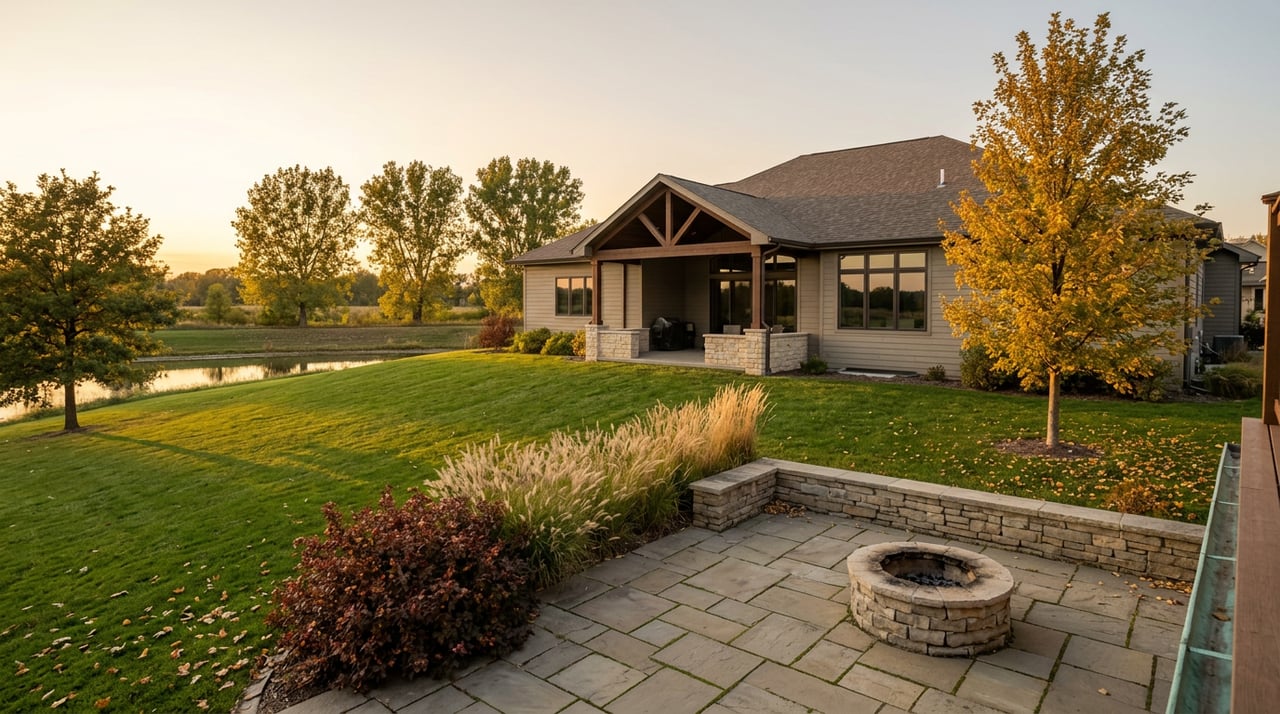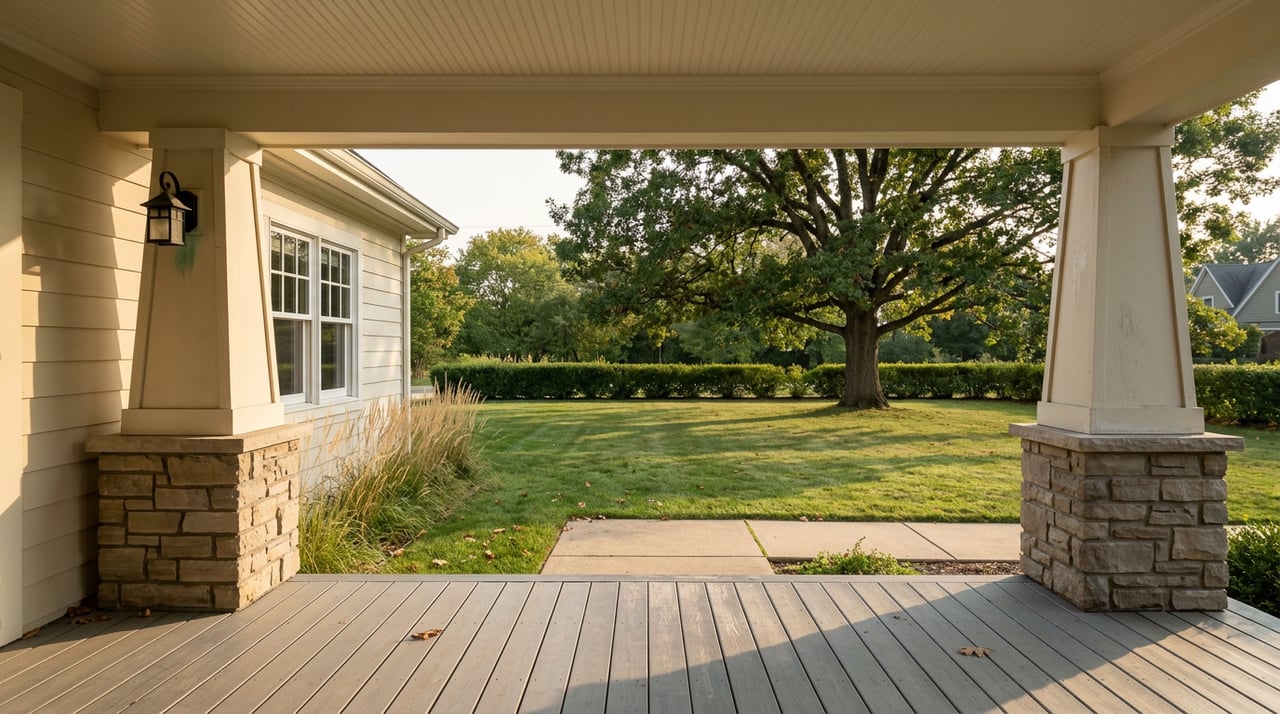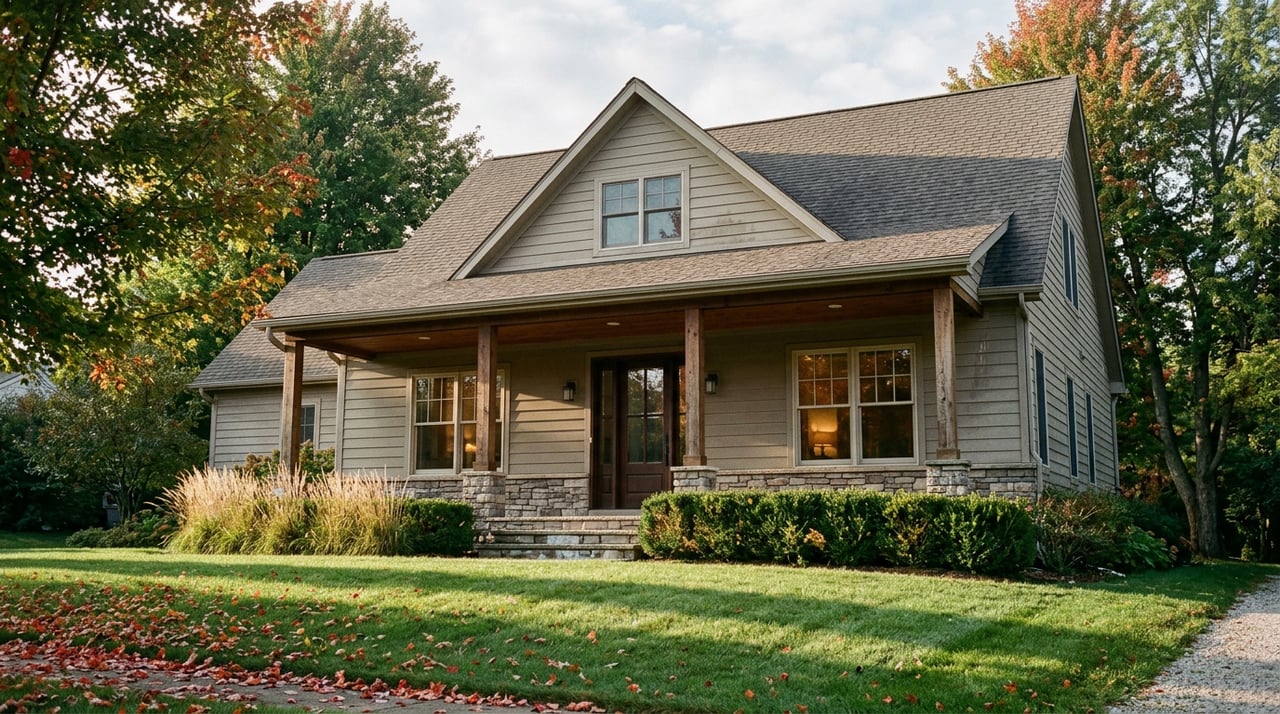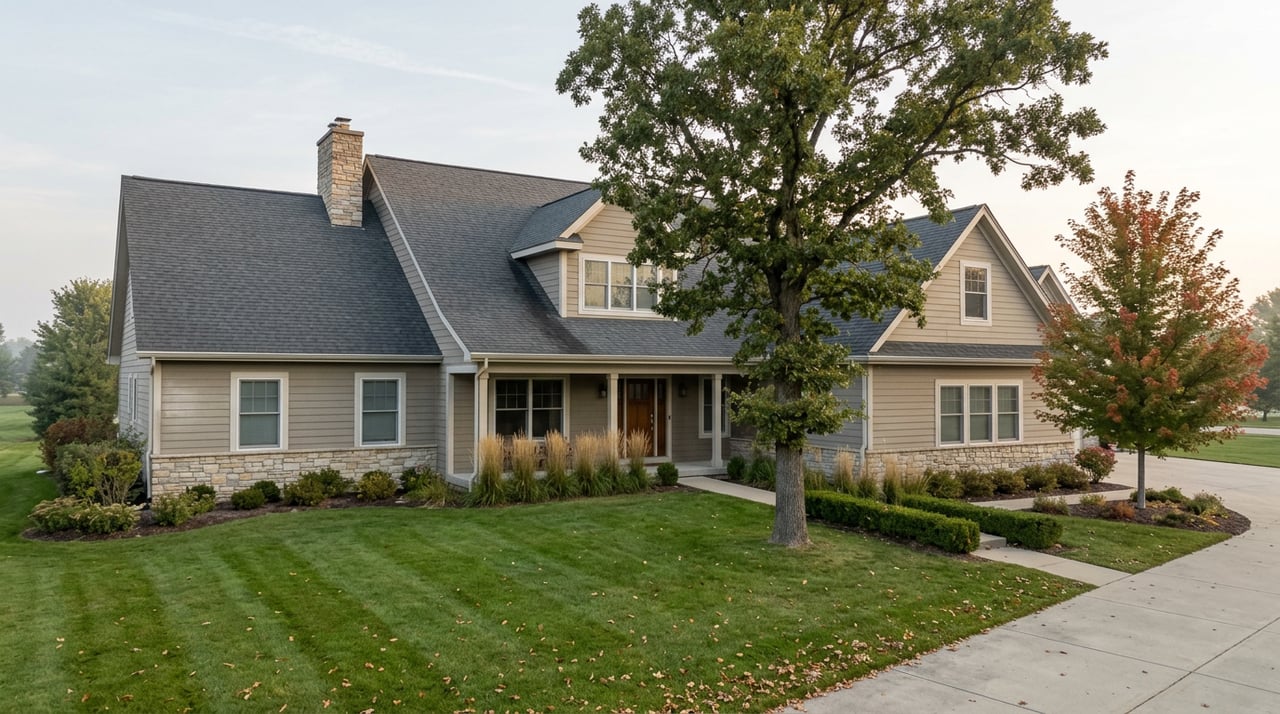
A buyer walks a listing in southeast Loveland. The description says "steps from the reservoir." They picture a kayak on a Saturday morning, maybe a dock, definitely a view worth the extra fifteen thousand dollars over a comparable house three streets over. Then they ask where the boat ramp is, and the answer is that there isn't one. There's a fifty-one acre pond, a homeowners association that has governed it since 1988, and a neighborhood of about 174 residents who like it quiet.
That gap between what "near the reservoir" implies and what it delivers is the whole story of buying around water in Loveland right now. The city has three separate bodies of water that get lumped together in casual conversation as "the lake," and each one hands the buyer a completely different set of rights. Rist Benson Reservoir is the smallest and least understood of the three, and understanding what it actually is, rather than what the word "reservoir" suggests, is the difference between paying for a lifestyle you'll use and paying for a view you'll admire from a fence line.
Three Reservoirs, Three Rulebooks
Loveland's water-adjacent housing stock splits into three distinct governance models, and none of them work the way a buyer coming from a market with true recreational lakefront might assume.
Boyd Lake is the public option, run by Colorado Parks and Wildlife as a state park. It's the one with camping, a swim beach, and historically a marina. But public doesn't mean permanent. The marina closed for the entire 2026 season after its operating contract ended and CPW decided low water levels didn't justify bringing on a new concessionaire. The swim beach didn't open either. CPW has said it hopes the marina comes back in 2027, but there's no firm timeline, and the agency has been direct that the closure reflects both the drought and years of deferred infrastructure at the site.
Lake Loveland is the private option. It sits inside city limits and reads as classic lake living, brick ranches and remodeled bungalows a short walk from Benson Sculpture Garden and downtown. But owning a house near Lake Loveland does not automatically include boating rights. Surface access is governed by the Lake Loveland Recreation Club, and water levels are managed by the Greeley & Loveland Irrigation Company as part of an active irrigation system, not a leisure amenity. A buyer has to confirm deeded surface rights the same way they'd confirm a mineral right or an easement. Proximity to the water and legal access to the water are two different line items.
Rist Benson is the third model, and it's the one most likely to be misread by an out-of-area buyer. It isn't a state park and it isn't a recreation club. It's a fifty-one acre reservoir wrapped by a residential neighborhood, governed by the Rist Benson Lake Homeowners Association, a nonprofit incorporated with the Colorado Secretary of State in September 1988. There is no public boat launch. The character that shows up consistently in local description is a quiet, family-friendly pocket with a community park, walkable streets, and a small population, the kind of place residents describe as clean and well maintained rather than a hub of water recreation.
| Reservoir | Governing body | Public boating or swimming | Status as of 2026 |
|---|---|---|---|
| Boyd Lake | Colorado Parks and Wildlife (state park) | Historically yes, via marina and swim beach | Marina and swim beach closed for the season, no reopening date, hope for 2027 |
| Lake Loveland | Lake Loveland Recreation Club, water managed by Greeley & Loveland Irrigation Company | Only with deeded surface rights | Active irrigation reservoir, access governed by club membership and deed |
| Rist Benson | Rist Benson Lake Homeowners Association (est. 1988) | No public launch | Residential HOA-managed pond, primarily a neighborhood amenity |
Why the HOA Matters More Than the View
If you're evaluating a house because it backs to Rist Benson, the HOA is the document that actually defines your purchase, more than the water does. An HOA formed in 1988 has had almost four decades to write covenants around exactly what residents can and can't do with the water, how shoreline maintenance gets funded, and what happens if the reservoir needs dredging or a spillway repair. None of that shows up in a listing photo of the water at sunset.
What the neighborhood offers instead is something real, just different from what "reservoir" implies. It's a small, established residential pocket where the water functions as a shared visual and recreational feature for people who already live there, not a public draw that brings outside boat traffic, marina noise, or seasonal congestion. For a buyer who wants a quiet street with mature landscaping and a water view without the parking and crowd management that comes with a state park down the road, that's a legitimate selling point. For a buyer who assumed they were getting Boyd Lake's public marina experience at a smaller scale, it's a mismatch that only surfaces after the offer is in.
The Boyd Lake Warning Sign
The Boyd Lake closure is worth sitting with for a second, because it undercuts the assumption that "public access" means guaranteed access. CPW didn't close the marina because of a policy change. It closed because the operating contract ended, the water levels didn't support bringing on a new operator, and the agency has been candid that the prior concessionaire's infrastructure had fallen into disrepair. A request for proposals is expected to go out this summer to find a new operator, and CPW's own language is that they're hopeful, not certain, about 2027.
That's the pattern across all three reservoirs, even the one that looks the most like a public utility. Water access in Loveland is administered, not owned. It depends on a contract, a club membership, an irrigation schedule, or an HOA covenant, and any of those can shift. Rist Benson's model, oddly, may be the most stable of the three precisely because it isn't tied to a marina concessionaire or a snowpack-dependent public agency. It's a small, self-governed system with a much simpler set of variables.
What This Means for the Price You're Actually Paying
Loveland's citywide numbers depend heavily on which source and which month you're reading. Over the three months ending in April 2026, Redfin put the median sold price at $490,000, up about one percent year over year, with homes taking roughly 59 days to sell. Zillow's smoothed home value estimate ran higher, near $509,866 through June 2026. Movoto's July 2026 figure for actual homes sold that month came in at $549,000. None of those numbers are wrong. They're measuring different things: closed sales, a rolling estimate, and a single month's transactions, respectively, and a buyer comparing listings against "the median" should ask which median they're looking at.
Regionally, Loveland still sits below its neighbors. Redfin's January 2026 data put Fort Collins near $545,000 and Windsor near $635,000, against roughly $522,450 in Loveland that same month. That gap is part of why some buyers cross city lines and why sellers in Loveland are wise to price with a regional lens rather than assuming their number should match Windsor's.
Where Rist Benson fits into that range is a judgment call, but it's an informed one. A reservoir with no boat ramp, no marina, and no recreation club isn't selling recreational access. It's selling a quiet street and a water view maintained by an HOA that's been doing this since the late 1980s. That's a real value, but it's a different value than a deeded dock on Lake Loveland or a state-park-adjacent lot at Boyd. Expect pricing here to track closer to Loveland's broader citywide median than to the outsized premiums that attach to true boatable lakefront elsewhere in the city.
A Short Checklist Before You Write an Offer
- Ask whether the HOA covenants mention water access at all, or only landscaping and view maintenance. Many reservoir-adjacent HOAs govern the latter and are silent on the former.
- Confirm whether the lot is legally deeded with reservoir frontage or simply adjacent to it. Adjacency and ownership are not the same thing.
- Ask who manages water levels, an irrigation company or a state agency, since that answer tells you whether the shoreline you're seeing today is guaranteed or seasonal.
- Request the HOA's current dues and any history of special assessments tied to the pond, dam, or shoreline upkeep.
- Visit at a different time of year than your showing. A reservoir at full pool in June photographs differently than the same reservoir in a drought year.
None of this makes Rist Benson a lesser choice. It makes it a specific one, with a specific set of rules that a buyer should read before they fall for the photo.
If you're weighing a home near Rist Benson against something on Lake Loveland or closer to Boyd Lake, the right move is to get the covenants and the deed language in front of you before you get attached to the view. Kristin Tibbs has walked Northern Colorado buyers through exactly this kind of due diligence, water rights, HOA structures, and the fine print that decides what you're actually buying. Let's Connect.