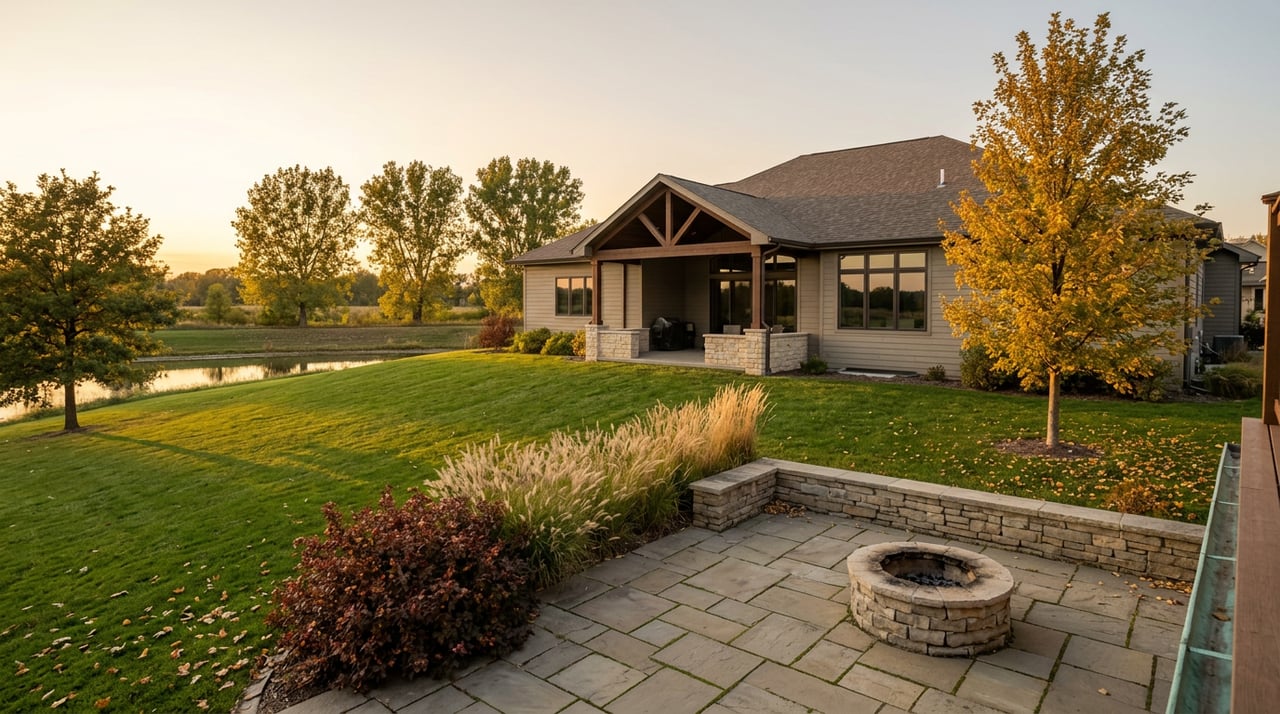
A buyer in Loveland found the house in June. Brick ranch, quarter acre, a private dock at the edge of a lawn that ran straight down to open water. By the time the inspection period closed and the paperwork was signed in September, the dock sat several feet above a shrinking waterline, with a strip of exposed mud where the lake used to be. Nobody had lied. Nobody had hidden anything on purpose. The lake does this every year, and the reason has nothing to do with drought or a bad summer. It has to do with a water right that predates most of the houses sitting on the shore.
If you are buying, selling, or already own property on Lake Loveland, the single most useful thing to understand is this: the lake is not included in your deed the way you probably assume it is. Two separate systems govern what you actually get when you buy on the water here, and neither one shows up on a standard listing sheet.
The Water Doesn't Come With the House
Lake Loveland is private. The recreational rights to the surface of the lake belong to the homeowners around it, and those rights are managed by the Lake Loveland Recreation Club, not by whoever holds title to a given lot. The public cannot launch a boat onto the lake, and swimming is limited to the North Shore beach during city-operated hours. That sounds like good news if you are picturing quiet water in your backyard, and for most owners it is.
The part that catches people off guard is the assumption that owning shoreline automatically means owning access to the water in front of it. It does not. A property can sit directly on Lake Loveland and still not carry deeded surface rights, or carry rights that require separate club membership to actually use. Before any offer gets written on a Lake Loveland property, the deed language on surface rights and the property's standing with the Recreation Club deserve the same scrutiny as the inspection report. This is a written confirmation, not a conversation with a neighbor who has lived there for twenty years and assumes everyone gets a dock.
Here is how the two layers actually break down, and what each one requires you to check.
| Layer | Governed By | What Proves It | What Happens If You Skip It |
|---|---|---|---|
| Land and shoreline | Larimer County recorded plat, HOA or subdivision covenants | Title commitment, recorded covenants | Standard resale risk, same as any home purchase |
| Recreation and boating rights | Lake Loveland Recreation Club | Deeded surface rights language, confirmed club standing | You can own the shoreline and still not be permitted to put a boat in the water |
| Water level itself | Greeley & Loveland Irrigation Company, under its Big Thompson River water right | GLIC's own published information on the reservoir's operations | Your dock or beach sits unusable for months, and it is not a surprise to anyone who checked first |
That third row is the one almost nobody asks about, and it is the one that actually explains what happened to the buyer in September.
The Reservoir Behind the View
Lake Loveland is not a natural lake. It was built in the 1890s as a storage reservoir, and it is still operated as one today by the Greeley & Loveland Irrigation Company, a shareholder-owned water company that has run this system since 1900. GLIC does not manage the lake for recreation. It manages the lake to deliver irrigation water to farms and municipal users between Loveland and Greeley, and that mission comes with a schedule that has nothing to do with what looks good from a dock.
Colorado water rights are ranked by seniority, oldest first, and Lake Loveland Reservoir's decree ranks ninth in line on the Big Thompson River. That means eight more senior water rights get filled before Lake Loveland does. Once GLIC starts delivering water to its users each June, it draws from all of its reservoirs, including Lake Loveland, to meet those demands. The lake gets lower through the summer by design, not by accident, and by the end of the irrigation season in late October it typically sits around 40 percent of its 12,736 acre-foot capacity. As of late August, the lake is already several months into that annual drawdown, well before the season's lowest point arrives.
If you are touring homes in June and picturing the shoreline you will have in October, you are picturing the wrong lake. The two are not the same body of water, functionally speaking, even though they occupy the same footprint.
The Rule That Quietly Raised the Baseline, Then Took It Away
Here is the detail that actually changes the story for anyone who has owned on Lake Loveland for a while versus anyone buying today.
Starting in the mid-1980s, GLIC and the City of Greeley had an arrangement that let Greeley store 5,000 acre-feet of Colorado-Big Thompson water in Lake Loveland Reservoir each fall. That single arrangement guaranteed the lake stayed at least 40 percent full through the winter, and in most years it pushed winter levels up to 80 or 90 percent of capacity, well above the reservoir's natural low point. For decades, that meant the lake most people remember, full and stable through the cold months, was partly a byproduct of a banking deal that had nothing to do with the lake's own water right.
In 2018, the Northern Colorado Water Conservancy District enacted a rule requiring that CBT water be used in the same year it is stored, which meant Greeley could no longer bank that 5,000 acre-feet the way it had for over thirty years. Since then, Greeley has only brought in the smaller amount of CBT water it actually needs that year, and the artificial winter cushion is gone.
What this means in practice is that the low, muddy shoreline a buyer might see in October or November today is closer to what the reservoir's own water right would produce on its own, without the extra water that used to smooth things over. Anyone who bought before 2018 and remembers a fuller winter lake is not misremembering. The lake genuinely behaved differently then. Anyone buying now should expect the unbuffered version, and plan around it rather than assume this year is an exception.
Before You Write or Accept an Offer
A few specific things are worth confirming in writing before either side signs anything on a Lake Loveland property.
- Ask for the exact surface rights language in the deed, not a verbal assurance that "the lake comes with the lot."
- Confirm current standing with the Lake Loveland Recreation Club, since membership and dues are separate from any HOA the property may also carry.
- If a dock, boat lift, or beach access is part of the appeal, view the property at more than one point in the season if at all possible, since June and October can look like two different properties.
- Understand that most of the shoreline is private. Public access is limited to North Lake Park on the north side and fishing access along the South Shore, so a listing photo taken from a public vantage point is not evidence of private access.
- If boating is part of your plan, remember Colorado requires aquatic nuisance species inspections for applicable watercraft, separate from anything the Recreation Club requires.
None of this makes Lake Loveland a bad place to buy. Homes there sit close to downtown, close to Benson Sculpture Garden, and on a body of water most of Loveland cannot access, which is exactly why the premium exists. The point is not to talk anyone out of the lake. It is to make sure the person writing the offer, and the person accepting it, are picturing the same lake in November that they saw in June.
Having flipped and managed rental property myself before I ever held a real estate license, I have learned that the surprises which actually cost people money are rarely the ones anyone hides. They are the ones nobody thought to ask about because the answer lives in a water company's operating history instead of a listing description. Lake Loveland is a beautiful place to live. It is also a working reservoir with an 1890s water right, and both of those facts deserve equal attention before you sign.
FAQ
Does buying a home on Lake Loveland automatically include boating rights? No. Recreation and surface rights are managed separately by the Lake Loveland Recreation Club and need to be confirmed in the deed and with the club directly, regardless of whether the property touches the shoreline.
Why does the lake look lower later in the year? Lake Loveland is an irrigation reservoir operated by GLIC under a water right that ranks ninth in seniority on the Big Thompson River. Water is drawn down through the irrigation season, typically reaching around 40 percent of capacity by late October, and a 2018 rule change ended a decades-old practice that used to keep winter levels higher.
Can the public swim or launch a boat on Lake Loveland? No, with one exception. Swimming is allowed at the North Shore beach during city-operated hours, and the South Shore offers public fishing access, but the public cannot launch watercraft anywhere on the lake.
Is Lake Loveland governed the same way as Boyd Lake? No. Boyd Lake is a state park reservoir with public boat ramps, while Lake Loveland's surface recreation is entirely private and controlled by lakefront owners through the Recreation Club. Buyers weighing the two should not assume the rules transfer between them.
If you are weighing a Lake Loveland property, on either side of the transaction, I would rather walk you through the deed language and the seasonal pattern before you fall in love with a June view. Kristin Tibbs has spent years buying, flipping, and managing property in Northern Colorado before ever selling it, and that owner's eye is exactly what a lake purchase like this calls for. Let's Connect.